 Litter properties in a secondary tropical forest 14 years after litterfall removal and irrigation
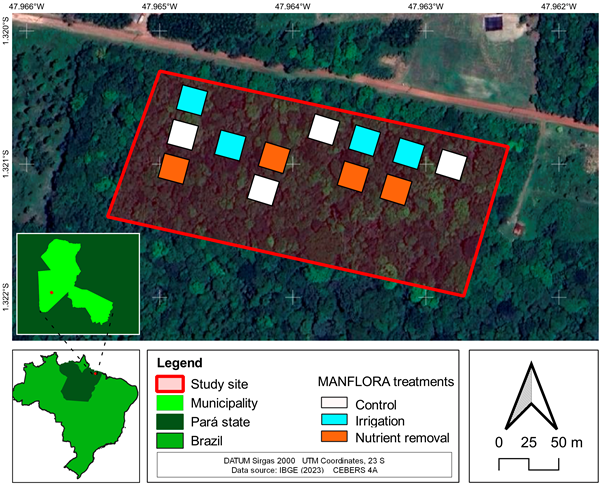
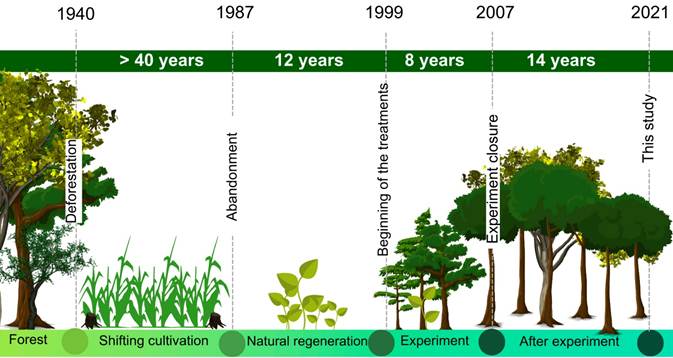
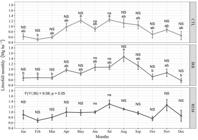
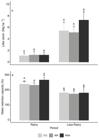
The functioning of tropical secondary forests is strongly influenced by the availability of water and nutrients, which regulate litter production, decomposition, and nutrient cycling. In Amazonian landscapes subjected to shifting cultivation, repeated disturbance and resource depletion may generate long-lasting legacy effects on ecosystem processes. Here, we evaluate whether such legacy effects persist in a secondary forest 14 years after the end of a large-scale field study that manipulated nutrient availability (via litter removal) and water supply (via irrigation) over eight years (1999-2007) in northeastern Brazilian Amazonia. We evaluated the enduring effects of water and nutrient management on litterfall, litter stock, and water holding capacity (WHC) 14 years after the conclusion of the experiment (2021), as well as the influence of meteorological variables on litterfall. Data collection took place monthly throughout 2021, and litter stock and WHC were measured during the months with the highest and lowest precipitation according to climatological averages. The total litterfall over year ranged from 10.48 ± 0.31 Mg ha-1 to 11.61 ± 0.29 Mg ha-1, with the highest litter stock observed in the dry season and the lowest WHC in the rainy season. Meteorological variables and treatments were not significant predictors of litterfall or litter stock variation, indicating weak direct climatic control over litter dynamics at this successional stage. The results suggest that secondary forests in Amazonia exhibit resilience after a prolonged stress (litterfall removal) and the ability to optimize resources following shifting cultivation in subsistence agriculture.
Keywords:
family farming; successional ecosystem; ecological restoration
 Thumbnail
 Thumbnail
 Thumbnail
 Thumbnail